Afresh: Design System Refresh + Cross-Platform Build
Business problem
Afresh risked losing our customers due to the app being exclusive to expensive tablet hardware. Corporate customers wanted centralized AI ordering—not store-level control. Stores were gaming the system in order to produce to correct recommendations. The strategy involved shifting labor away from stores to corporate. We had 12-18 months to prove a scanner solution or face churn.
People problem
Shift the mental model from "inventory + ordering" (1.5 hours) to "inventory only" (20 minutes)—while de-bloating features built over years by multiple PMs.
Strategy
Old tablet workflow
Store managers took inventory on all items + placed orders in same session
Bloated UI with 12+ data fields per item
1.5 hours average time
High cognitive load leading to errors, fatigue
New scanner goal
Inventory on AI-selected set of items only
Ordering handled centrally by corporate (still in scanner for some customers)
Single-task focus leading to speed + accuracy
Design system: Why we refreshed
When I joined, the design system was incomplete and lacked mobile considerations. Designers were creating custom components that quickly proliferated into inconsistent variations—the same elements styled differently across products. The team urgently needed consistency to strengthen brand equity and accelerate both design and engineering velocity.
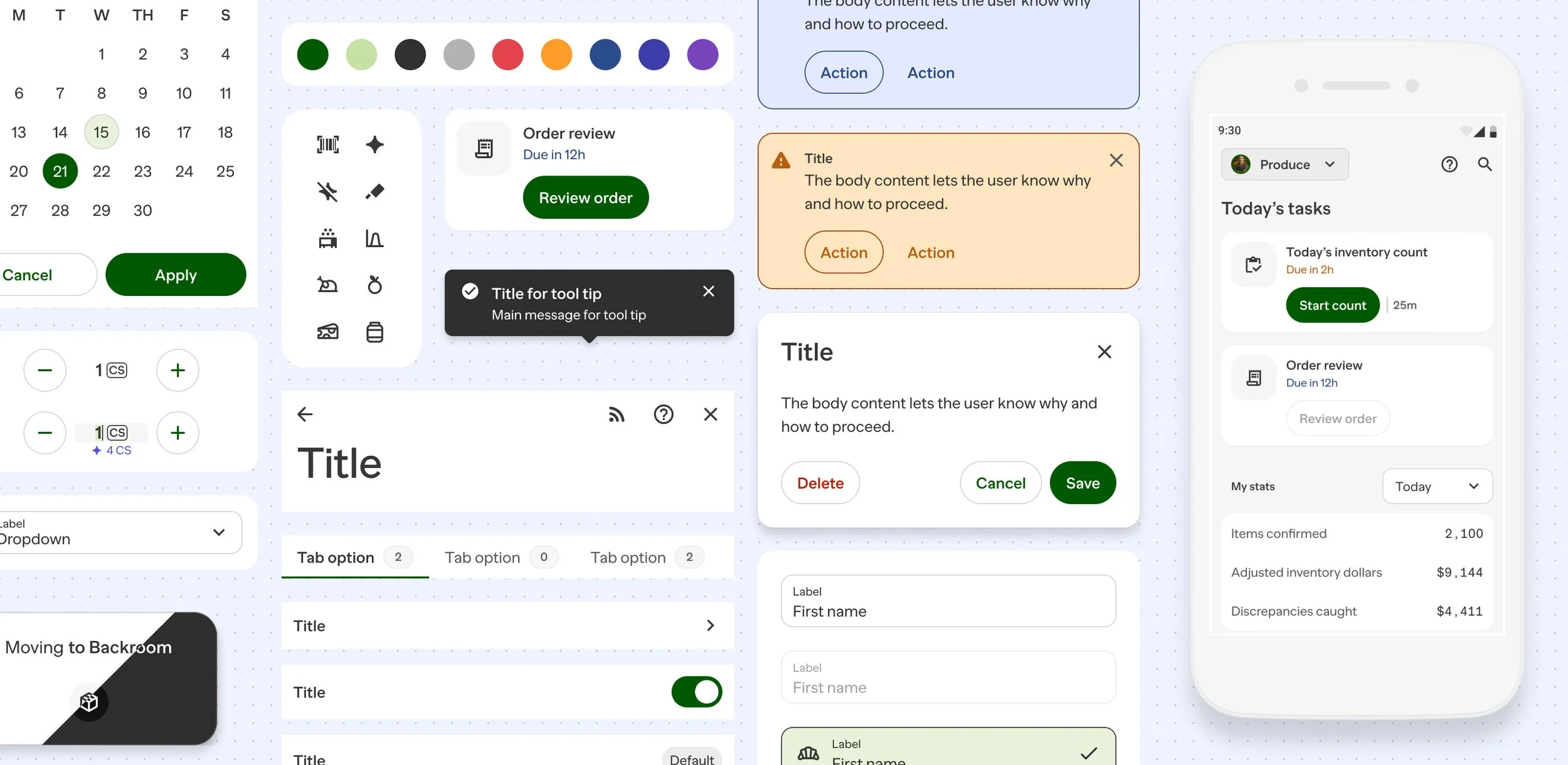
Design considerations
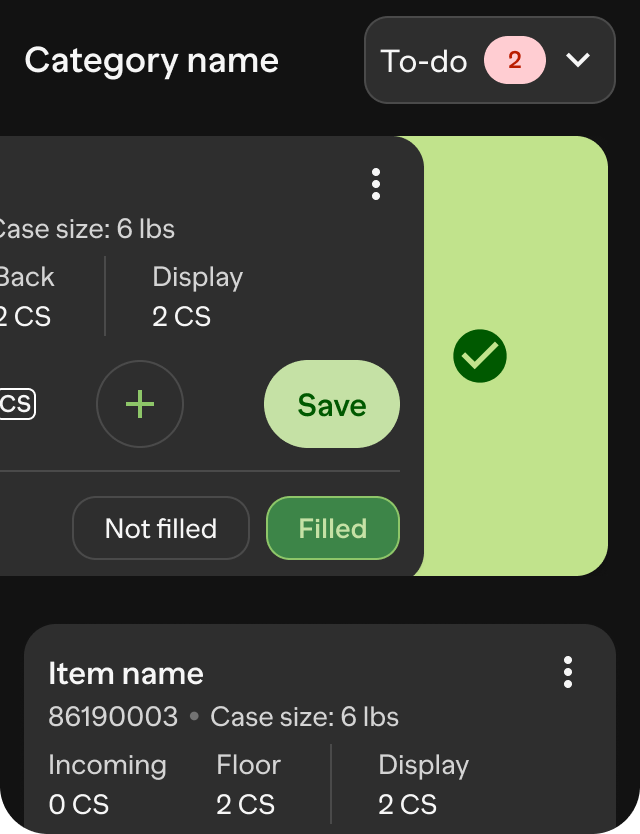
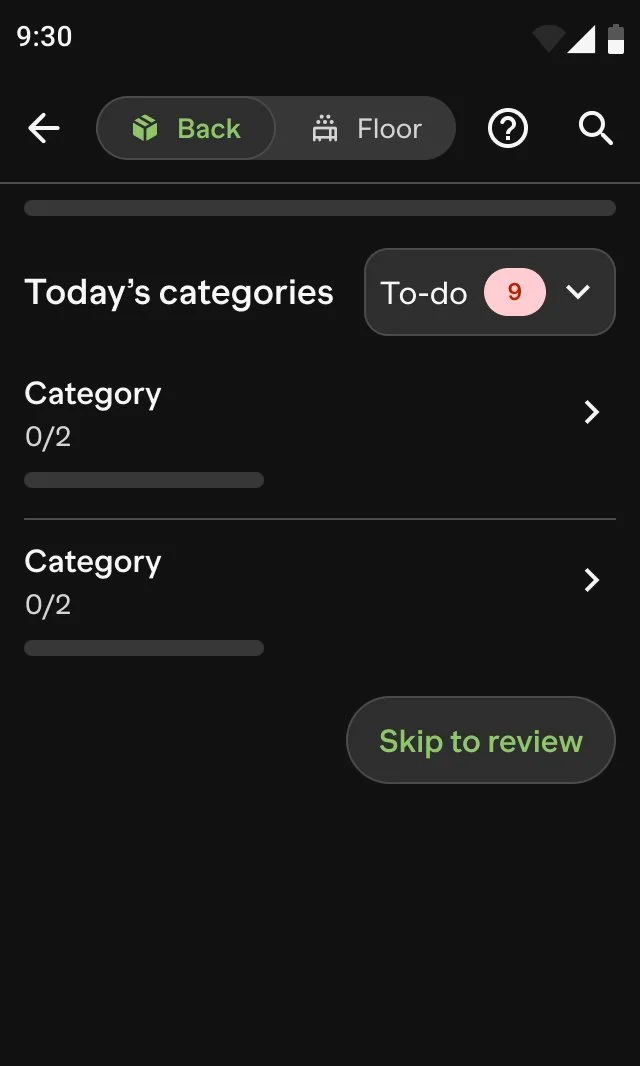
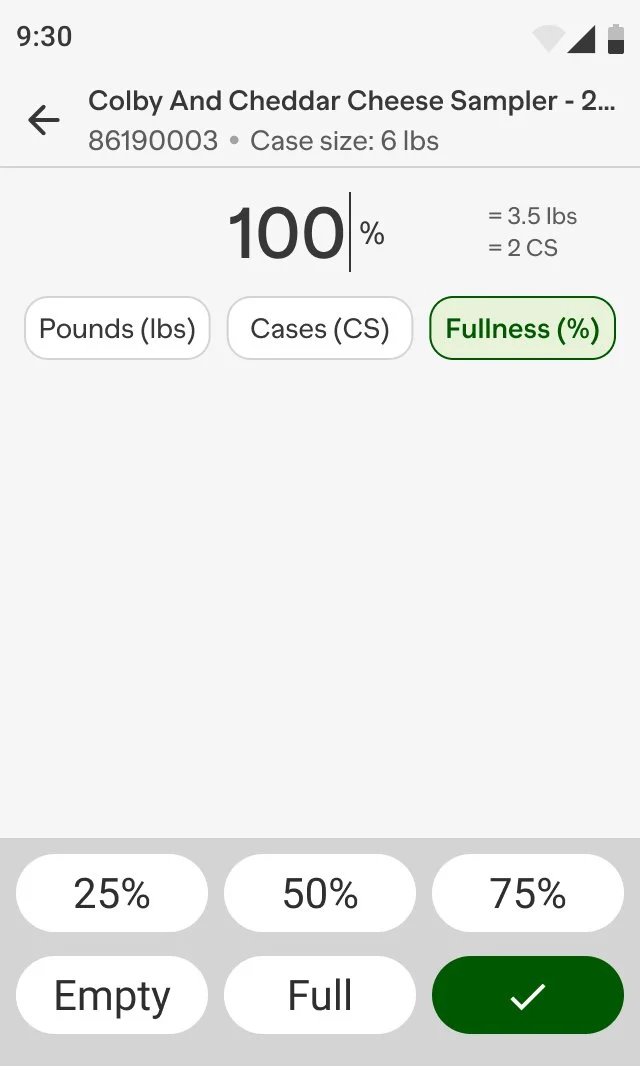
Designs have been optimized for one-handed use and cold storage–gloves means larger tap targets. We use dark mode in the backroom where there is poor lighting and light mode on the bright floor.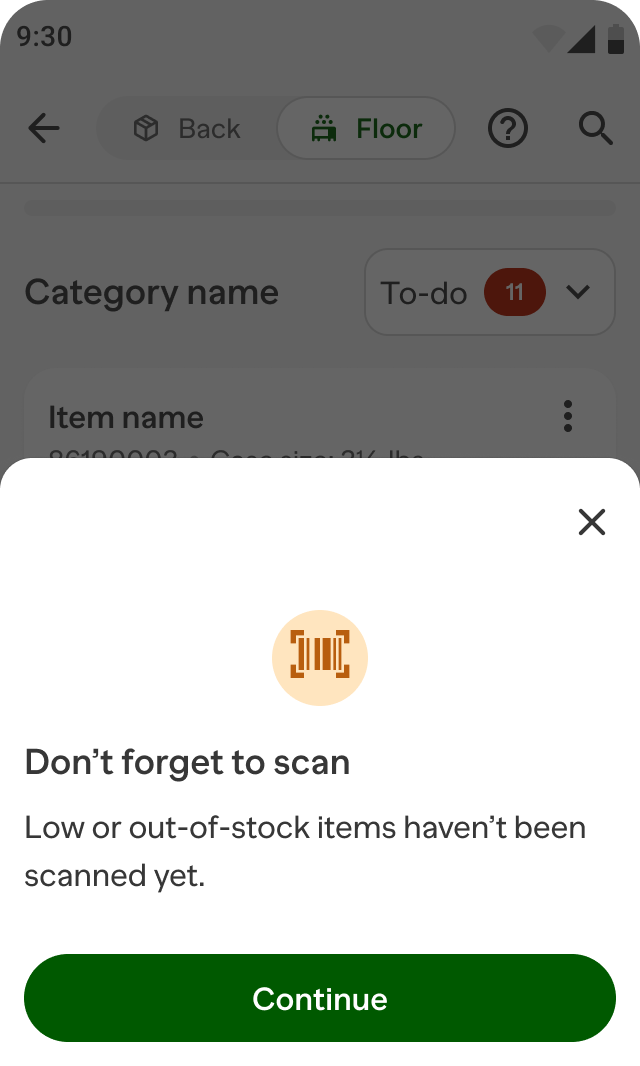
Contextual guidance have been built in for graceful feedback. In this case, we've detected the user is not scanning.Select Inventory Screens
Login
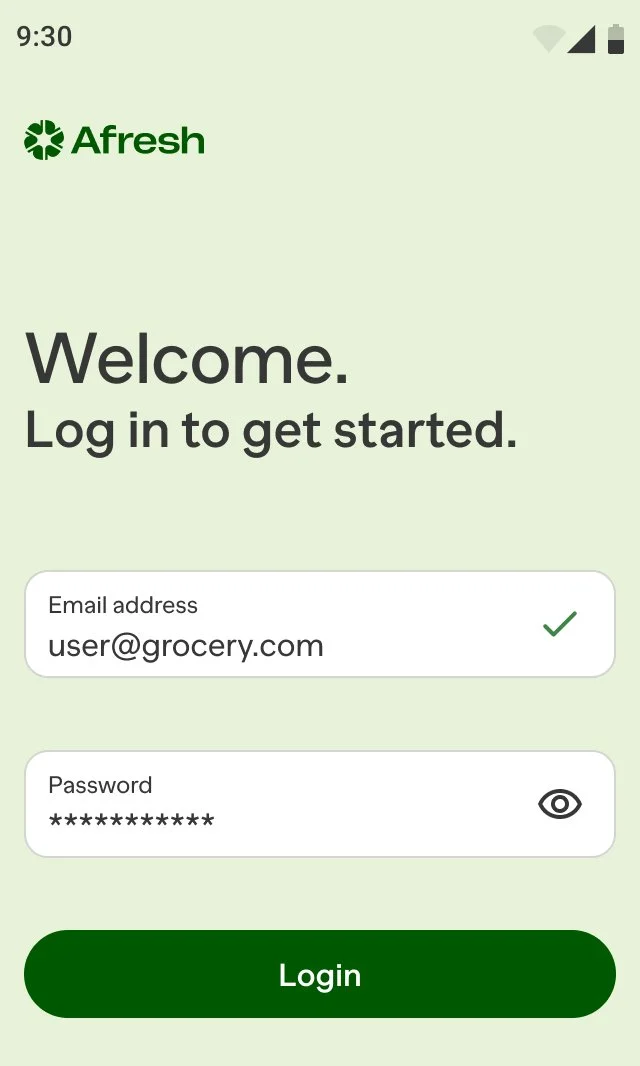
Delivery confirmation
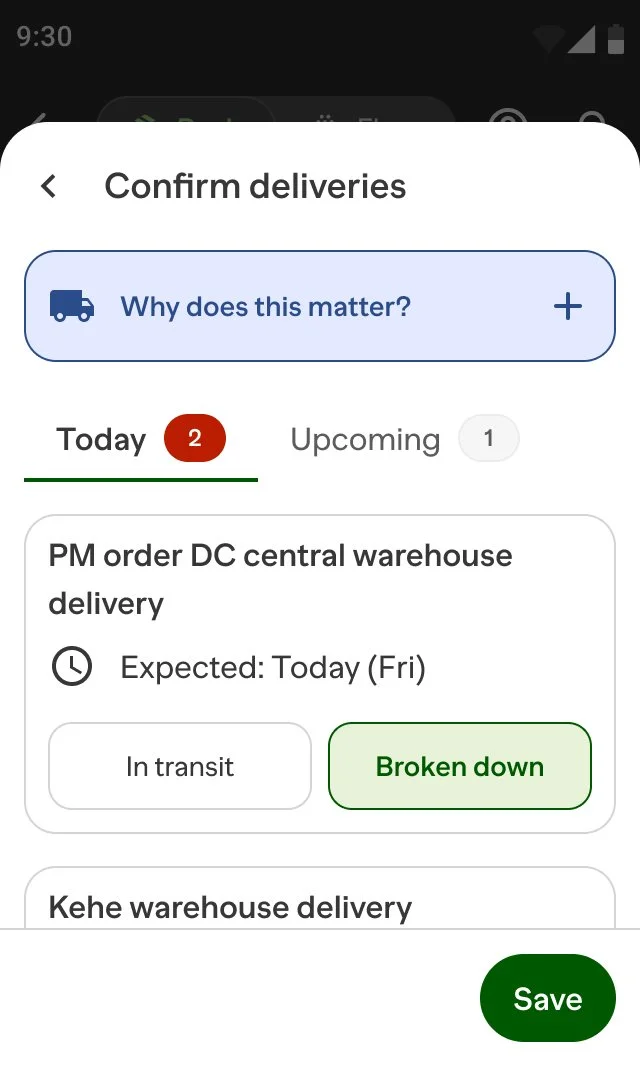
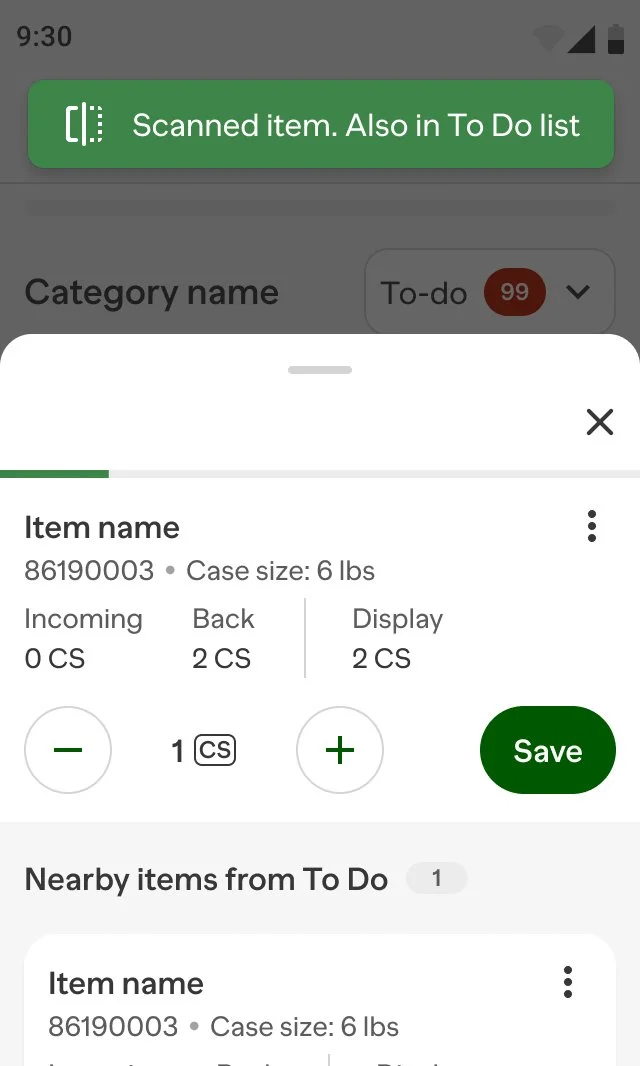
Scanned item
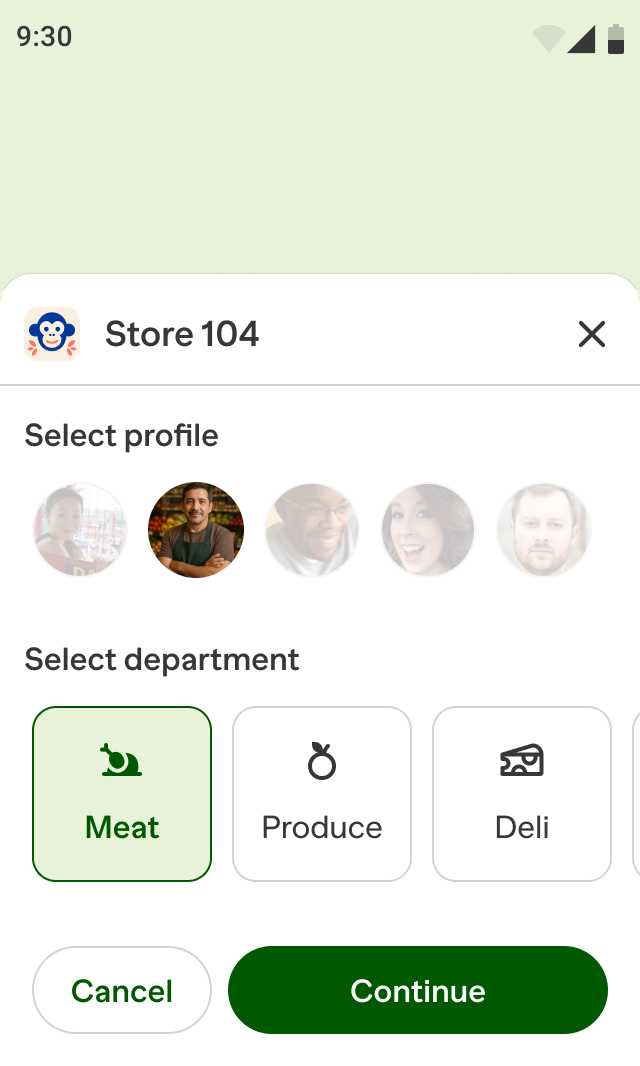
Department select
Category hub
Inventory review
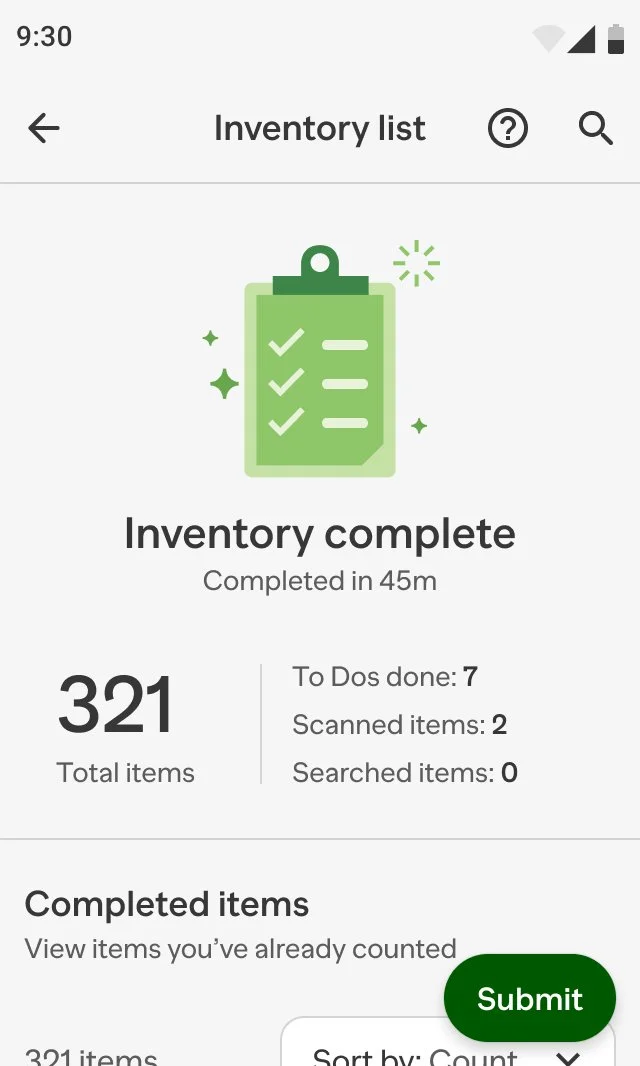
Profile
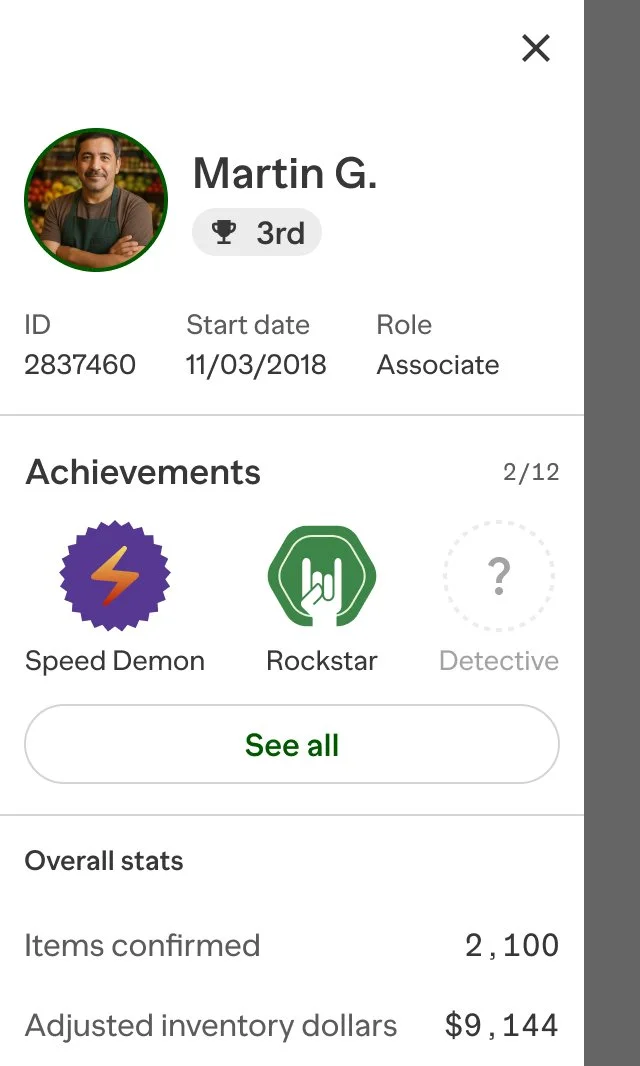
Category completion
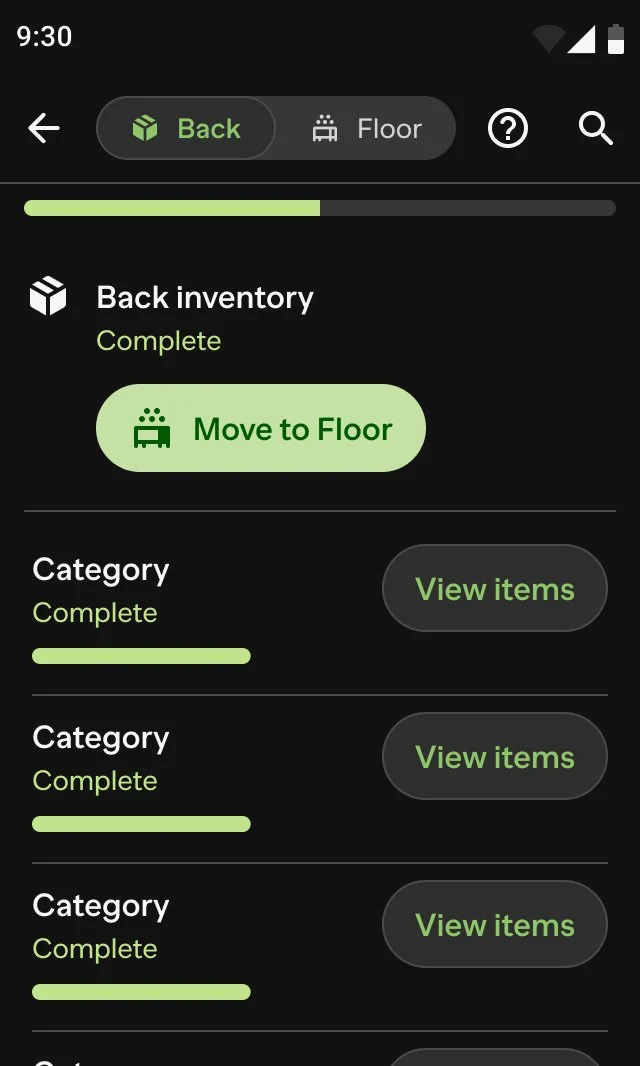
Stage switcher
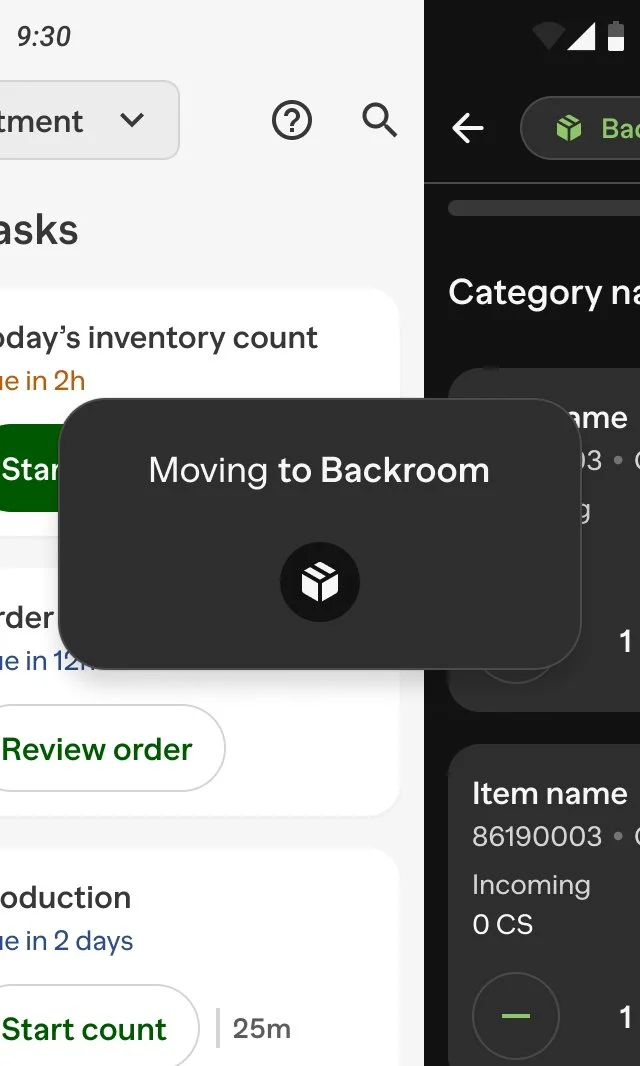
Units switcher
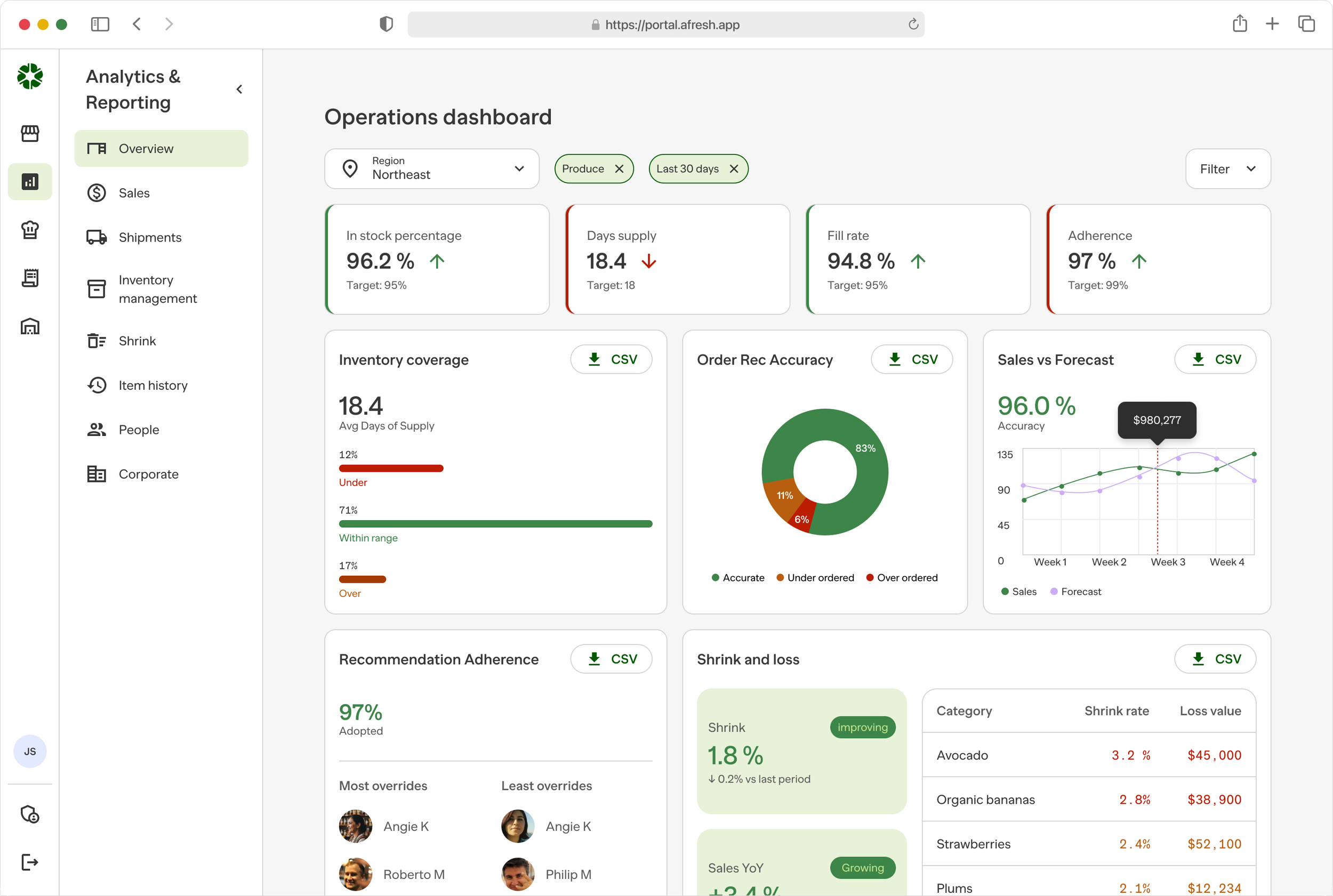
Dashboard–We are showing one narrative; Forecast → order → shelf → sales
Features
Executive KPI Strip
Fast confidence + positive/negative clarity
Ordering behavior
Understand the ordering behavior + accountability without blame
Order Rec Accuracy / Sales Forecast
Builds trust in the system
Inventory health
Do we have the right inventory?
Region selector
Aggregatable: Store to District to Region to Corporate
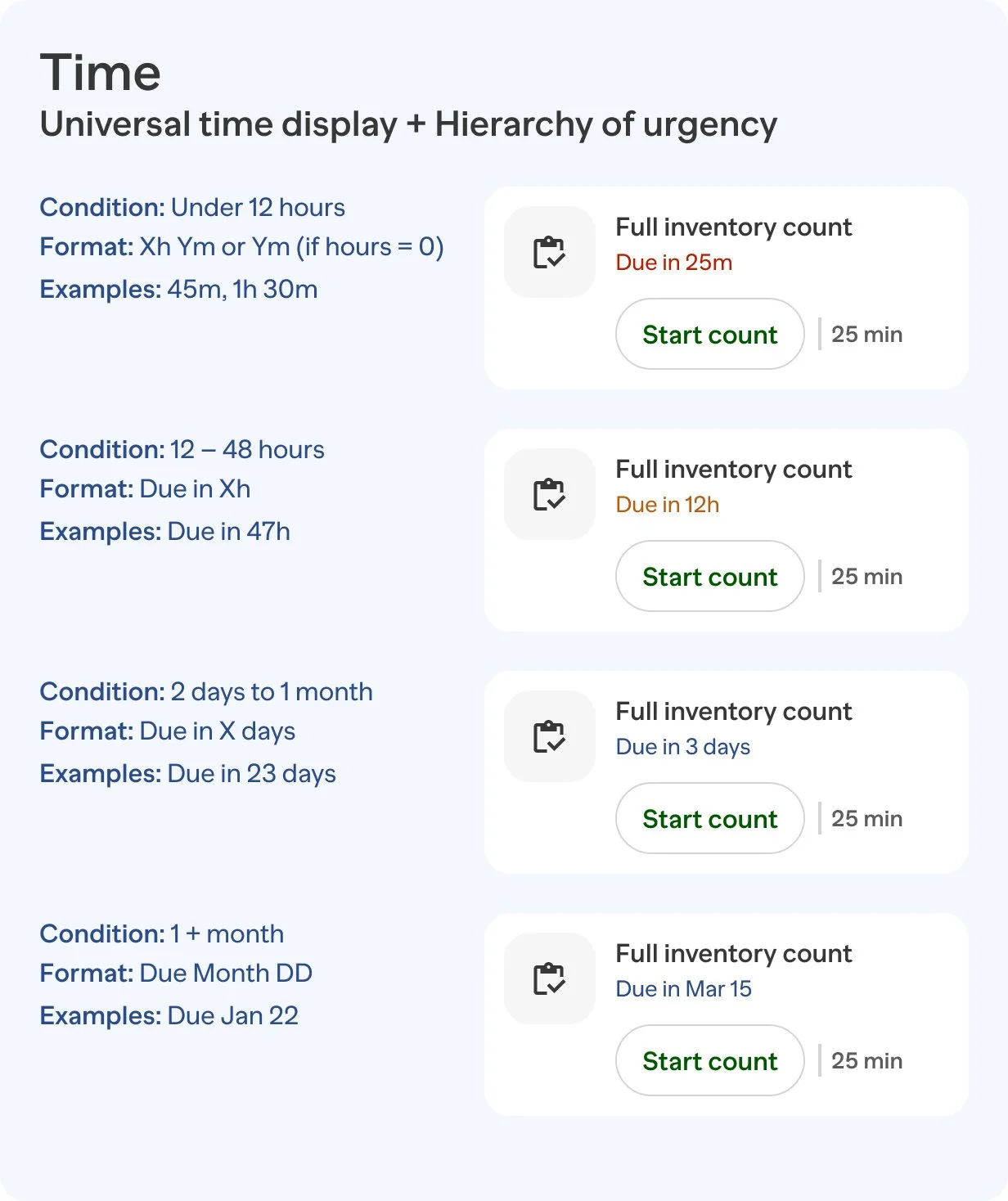
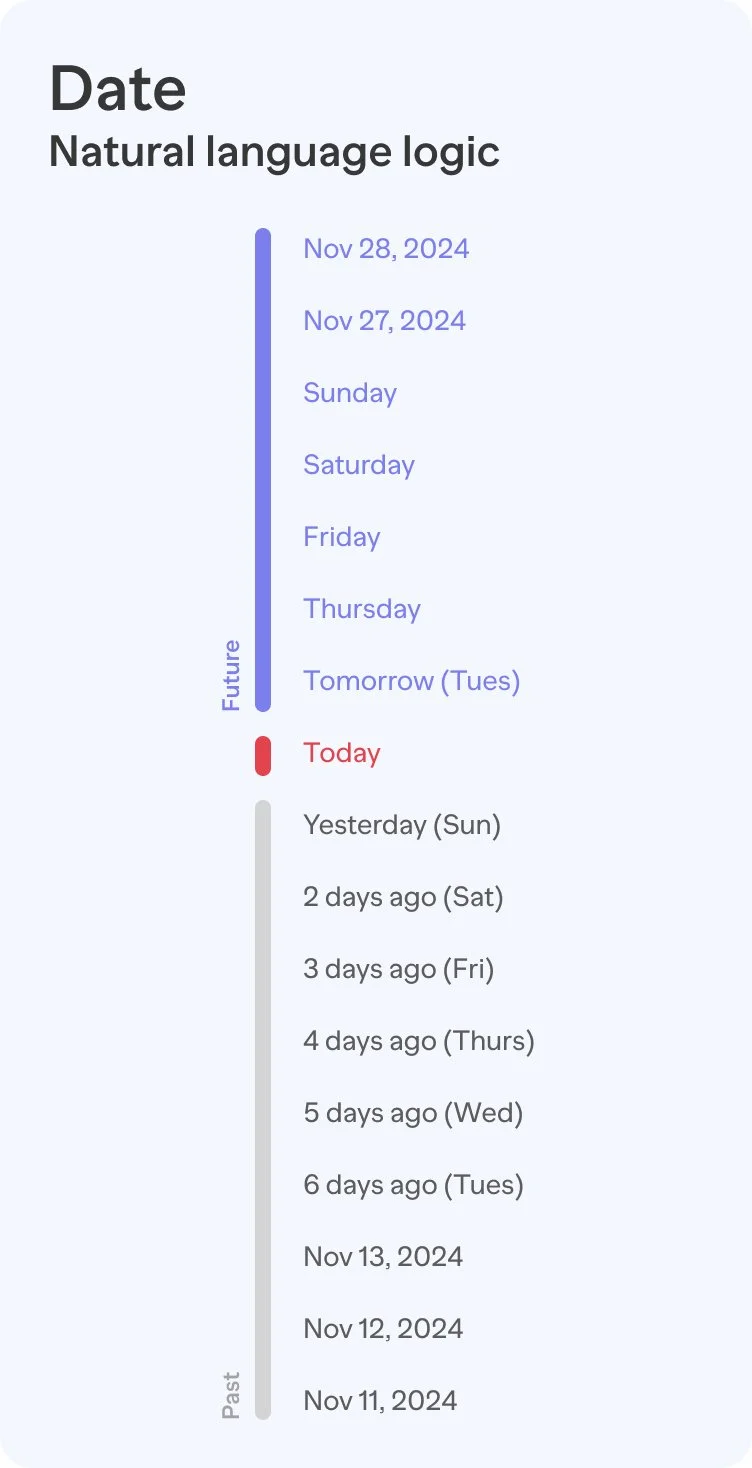
Shipped to 93 stores: Fresh Thyme, Heinen's
Before
1.5h
Avg time
Manual ordering
After
20m
Avg time
Centralized AI ordering
Future goal
5m
Avg time
Full automation